Far beyond the rush of cities, where roads narrow into mountain trails and time slows into stillness, lies a land untouched by modern chaos — Kinnaur, one of Himachal Pradesh’s most sacred and breathtaking regions.
Here, beneath the towering presence of the Kinnaur Kailash range, life flows in rhythm with nature.
Mornings begin not with alarms, but with the golden sunlight touching snow-covered peaks. The air carries the scent of pine, wild herbs, and wood smoke. Rivers like the Baspa flow with glacier purity, nourishing valleys that have remained unchanged for centuries.
It is here — in this quiet, powerful land — that Granular Nectar was born.
The story of Granular Nectar is deeply rooted in the valleys of Sangla and Kalpa — places known not just for their beauty, but for their self-sustained, honest way of life
These valleys are home to:
Here, farming is not industrial — it is intimate and personal.
Families wake before sunrise, tend to their orchards, care for their cattle, and live in a way that
modern life has almost forgotten.
In these homes, cows are not assets.
They are family members.
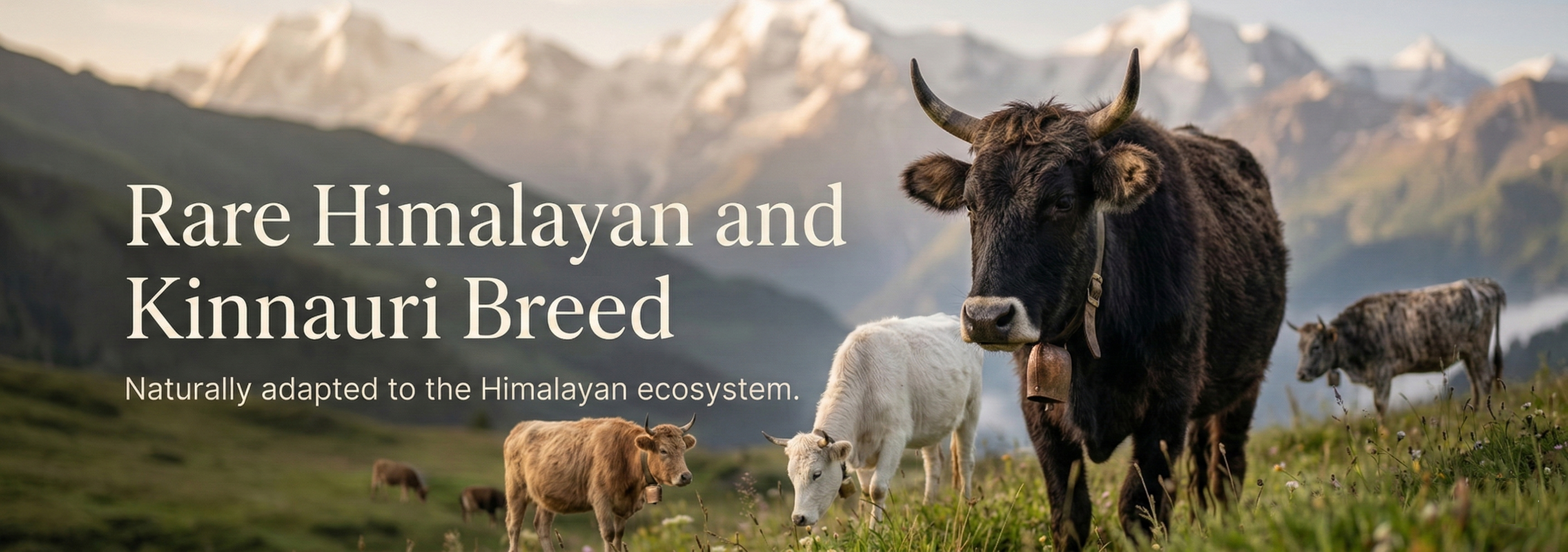
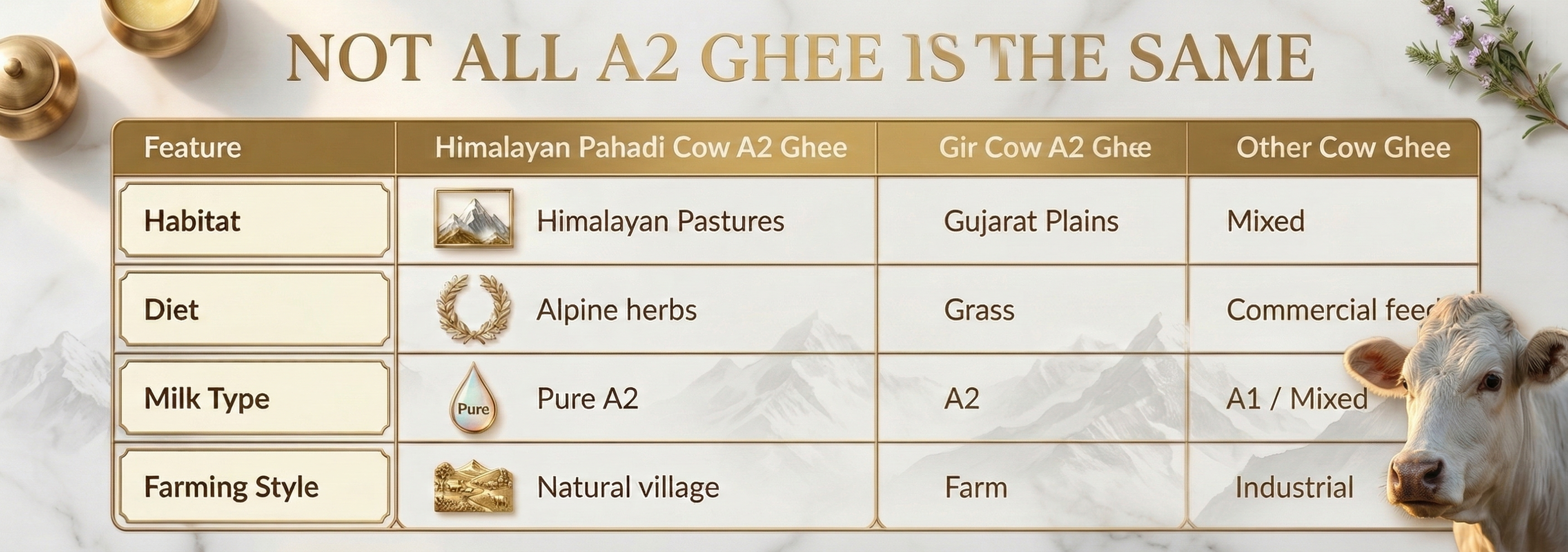
The indigenous Pahadi cows of Kinnaur are unlike any other.
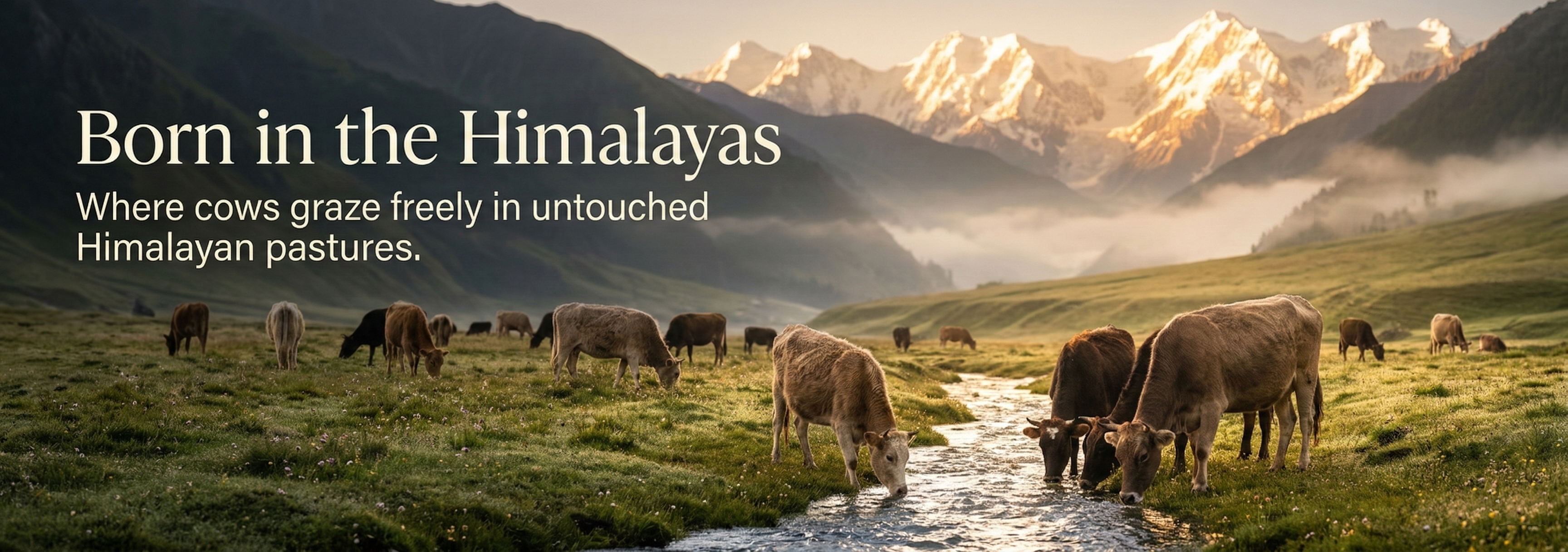
They are smaller, resilient, and deeply adapted to the harsh Himalayan terrain. They graze freely
on wild alpine herbs, drink glacier-fed water, and move across landscapes untouched by
chemicals or artificial feed.
This natural lifestyle creates milk that is rare —
rich, pure, and deeply nourishing.
But beyond nutrition, there is something more profound:
A bond of respect.
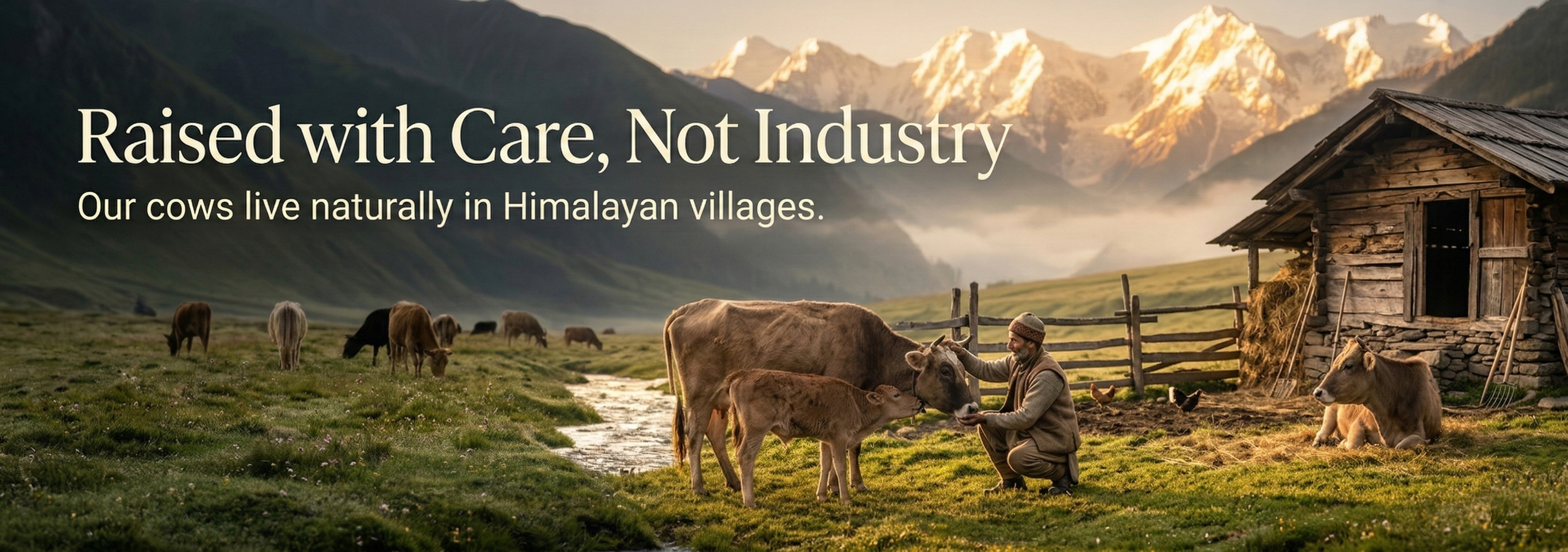
In Kinnaur, cows are cared for with patience and gratitude. Calves are always fed first. Milking
is done gently. Nothing is forced.
This relationship is not transactional —
it is sacred.
In these Himalayan homes, ghee is not made in machines.
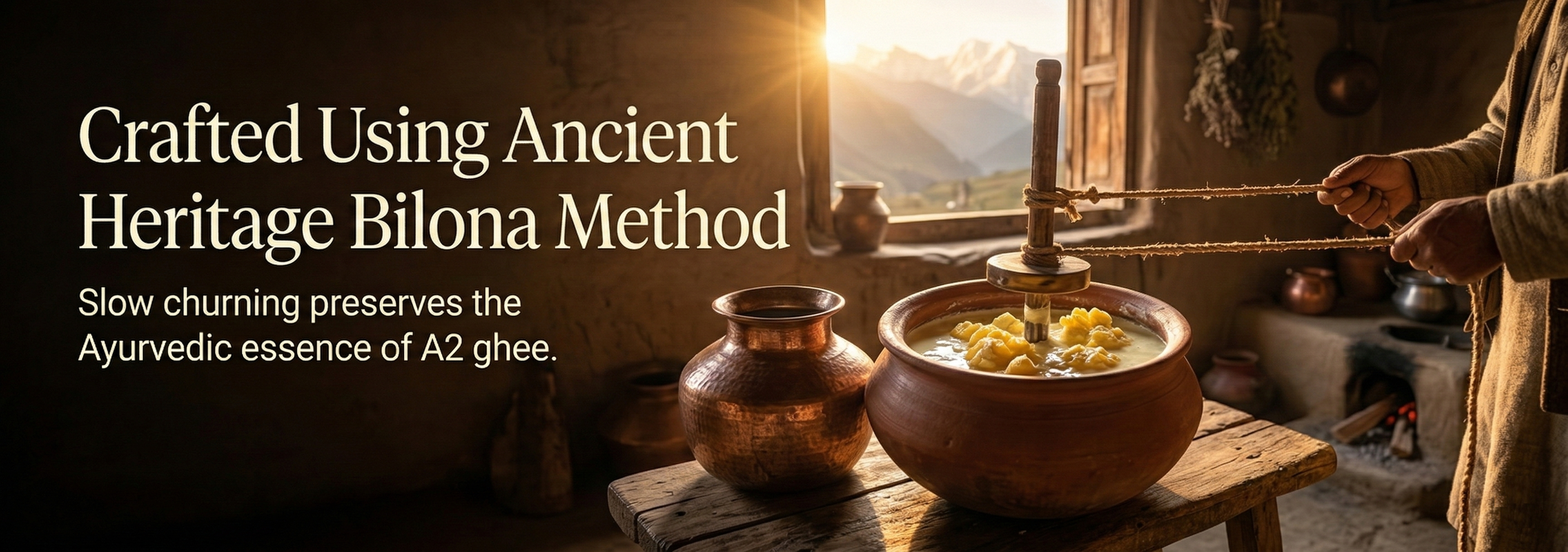
It is created through the ancient Bilona process, a ritual that requires time, effort, and care.
Milk is first set into curd.
Curd is hand-churned using wooden churners.
Butter is slowly separated.
Then gently cooked over a low flame — often using traditional fuels like cow dung cakes.
As the butter melts, the kitchen fills with a deep, soulful aroma.
And what remains is not just ghee —
but a concentrated essence of purity, patience, and tradition.
Granular Nectar is not built in factories.
It is built through the lives of Kinnauri families — small communities who have preserved
these practices for generations.
These are people who:
Their knowledge is not written in books.
It is passed from one generation to another — through experience, observation, and respect for
nature.
When you hold a jar of Granular Nectar,
you hold the work of real people, real hands, and real heritage.
In a world moving towards mass production, shortcuts, and artificial enhancement — something
essential was being lost.
Purity became a label.
Tradition became a marketing word.
And food lost its connection to origin.
Granular Nectar was born to protect what was disappearing.
To bring forward a product that is:
It is an effort to bridge two worlds —
the untouched Himalayas and modern homes.
Granular Nectar is more than ghee.
It is:
Every spoon carries a story —
of Kinnaur, of its people, and of a tradition that refuses to fade.
“We don’t produce in volume.
We preserve what is rare.”